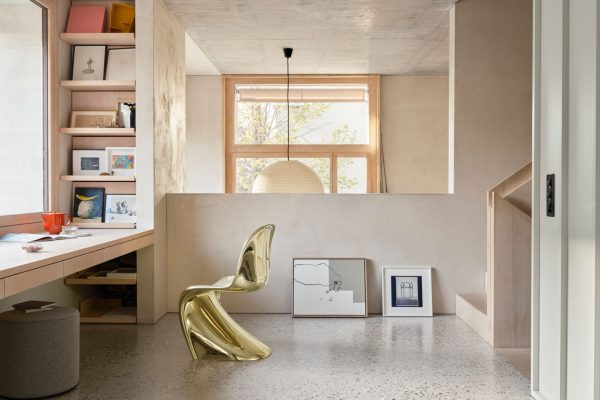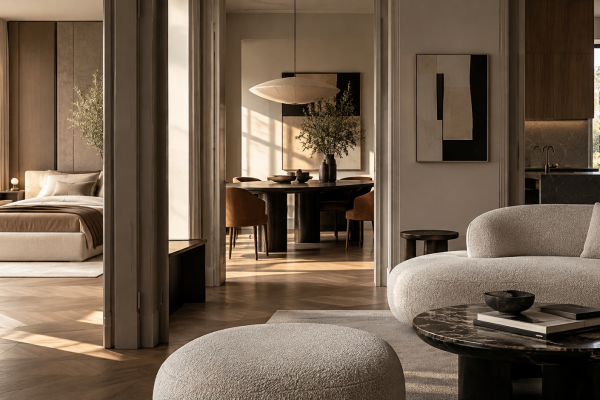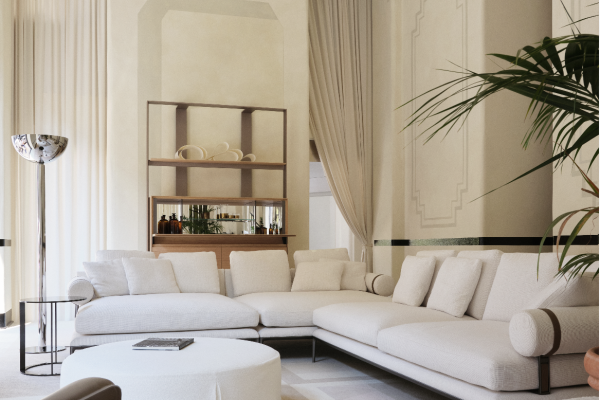
True luxury is not seen. It is recognized.
1. What are invisible details
In high-end interior design, value is never immediately obvious: it is perceived over time, through balance, precision, and coherence.
Invisible details in design are defined as the set of technical and design solutions—joints, alignments, proportions, and finishes—that determine the overall quality of a space without being immediately visible.
It is a quiet value, built through technical choices that rarely attract immediate attention, yet define the overall quality of a space.
We are talking about perfect alignments, calibrated thicknesses, materials combined with millimetric precision, and integrated systems that disappear from view. These are elements that do not shout, but make the difference between a simply beautiful environment and a truly well-designed interior.
Within this design approach, specialized consultancies in materials and interior solutions such as SAG’80 place particular attention on what is not visible, recognizing it as a key factor in the final quality.
2. Joints, alignments, proportions
Joints are one of the first indicators of design precision. A kitchen or boiserie may appear flawless from a distance, but it is up close that true craftsmanship becomes evident: aligned gaps, perfect corners, and continuity between different materials.
Alignments are equally crucial: the position of a handle, the height of a worktop, the relationship between doors, windows, and furniture. When everything is coherent, the space feels naturally balanced, even if the user cannot explain why.
Proportions, finally, are the aesthetic foundation of design. An overly thick element, an out-of-scale module, or an oversized feature can compromise the overall harmony.
Design work consists precisely in calibrating every dimension so that the environment feels fluid and proportionate.
3. Quality of finishes
Finishes represent the point of contact between the user and the project. Here too, luxury is discreet: surfaces that maintain their beauty over time, uniform coatings, carefully selected woods, and metals treated with advanced techniques.
Quality is not only visual, but also tactile. A flawless lacquer, a well-crafted solid wood edge, a soft-close hinge: these are details that do not draw attention, yet immediately communicate the solidity of the project.
In contemporary interior design, the choice of finishes becomes a strategic design decision, focused on durability, coherence, and the sensory quality of the space.
4. Coordination between elements
A high-quality interior is not the sum of iconic pieces, but the result of impeccable coordination.
Design is direction: every element must enter the system with precision. Lighting, furniture, cladding, and technical systems must all interact coherently.
Coordination also involves chromatic consistency, material continuity, and the management of visual lines. A well-orchestrated project allows the space to “breathe,” avoiding overlaps or unintended contrasts.
SAG’80 works on this design direction, integrating aesthetics, functionality, and technical aspects into a coherent system.
5. Common mistakes
When invisible details are overlooked, errors quickly emerge:
- misaligned or irregular joints
- level differences between surfaces
- materials combined without coherence
- poorly calibrated lighting
- unbalanced proportions
These imperfections compromise the perception of quality, even when high-end furniture is used.
Conclusion
In high-end interior design, luxury is not about display: it is about precision, coherence, and control.
Invisible details are the true signature of a well-executed project. They do not impose themselves on the eye, but build over time a deep and lasting perceived quality.
It is in this ability to transform technique into quiet elegance that interior design reaches its highest level.
FAQ
What are invisible details in interior design?
They are design elements such as joints, alignments, proportions, and finishes that determine the quality of a space without being immediately visible.
Why are details so important in high-end interiors?
Because they influence the perception of quality, the coherence of the space, and the durability of the project over time.
What mistakes compromise the quality of an interior?
Misalignments, inconsistent materials, incorrect proportions, and poorly integrated lighting are among the most common issues.