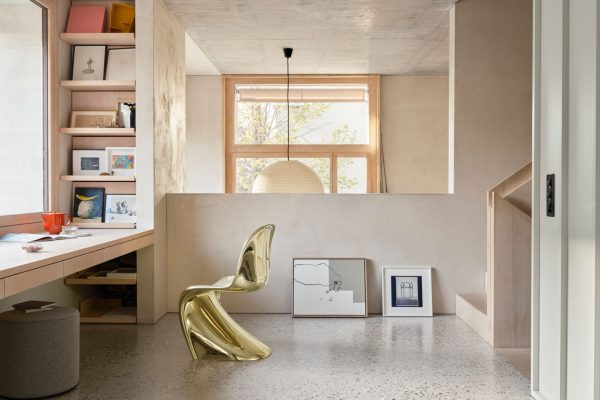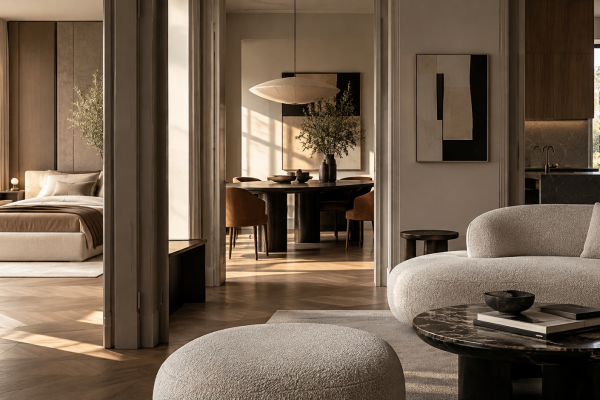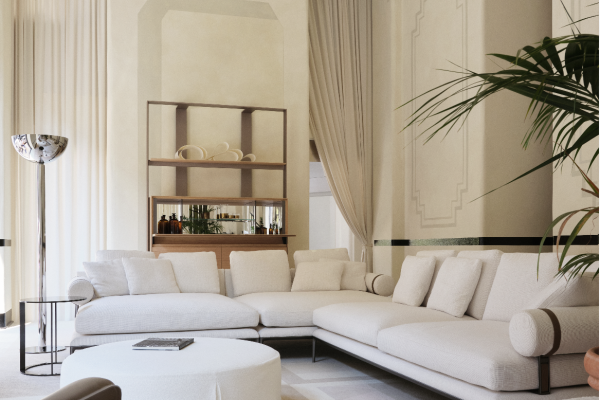
A quality interior is not chosen. It is designed.
Bespoke design is today one of the most solid pillars of contemporary interior design. It is not simply about selecting high-quality furnishings, but about building an integrated project capable of interpreting space, enhancing materials and precisely responding to the needs of those who live in it.
In this context, specialized design consultancies such as SAG’80 interpret bespoke design as a process where technical expertise, aesthetic sensitivity and vision are coherently integrated.
Bespoke interior design can be defined as a design approach that integrates space, materials, functions and details to create coherent, unique and long-lasting environments.
1. What bespoke design really means
Talking about bespoke design means going beyond superficial customization. A tailored project begins with listening, analyzing daily habits, understanding the architectural context and translating all of this into coherent solutions.
Every decision—from spatial layout to material selection—becomes part of a unified system, designed to last over time and evolve with the life of its inhabitants.
Bespoke design is therefore not a simple adaptation of furniture to space, but a creative and technical process that builds a precise, recognizable and harmonious identity.
2. The difference between standard furniture and an integrated project
Standard furniture, while offering quality and variety, responds to generic needs. An integrated project, on the other hand, works holistically: volumes, proportions, light, functions, circulation and materials.
This approach allows you to:
• optimize every available centimeter
• ensure aesthetic continuity across different spaces
• coordinate fixed and movable furnishings
• seamlessly integrate systems, lighting and technology
• create a fluid and coherent living experience
An integrated project is what transforms a well-furnished space into a truly designed environment, where nothing is random and everything contributes to an overall balance.
3. Coherence between materials, space and function
The quality of a bespoke project is measured by its ability to orchestrate materials, volumes and functions. The choice of wood, stone or textiles is never purely aesthetic: it affects spatial perception, light, tactility and durability.
In contemporary design, materials are not finishes—they are structural elements of the architectural language.
SAG’80 works with a curated selection of high-end materials and surfaces, chosen to ensure visual continuity and sensory coherence within each project.
Material thus becomes a design language, capable of defining the atmosphere of a space and dialoguing with the surrounding architecture.
4. The role of detail
In a tailored project, detail is not decoration—it is structure. The precision of joints, the continuity of grain, the alignment between vertical and horizontal elements, the management of shadows and depth all determine the perceived quality of a space.
It is in the detail that a project becomes credible, coherent and long-lasting.
Detail is what distinguishes a “well-made” project from an exceptional one. It is the invisible signature of the designer—the proof of care and expertise behind every decision.
5. Common mistakes in “fake bespoke” design
In today’s market, it is increasingly common to encounter solutions presented as bespoke that are, in reality, only minor adaptations of standard products.
The most frequent mistakes include:
• lack of coherence between materials and palette
• furniture adapted to space without an overall vision
• poor integration between furnishings, systems and lighting
• aesthetic solutions not supported by real functionality
• neglected details that compromise the final harmony
A true bespoke project requires time, expertise and an integrated vision—it cannot be improvised.
Conclusion
Bespoke design is what distinguishes a correct interior from a truly successful one. It is not only about aesthetics, but about the ability to create coherent, functional and long-lasting spaces.
In a context where “fake bespoke” is increasingly widespread, the value of a tailored project becomes a defining element: it is what transforms a space into an environment that is thoughtfully designed, lived in and recognizable over time.
FAQ
What does bespoke interior design mean?
It is a design approach that integrates space, materials and functions to create personalized, coherent and long-lasting environments.
What is the difference between standard furniture and bespoke design?
Standard furniture responds to generic needs, while bespoke design is tailored to a specific space and to the needs of its users.
Why is bespoke design more effective?
Because it ensures coherence, space optimization, material quality and a better living experience over time.