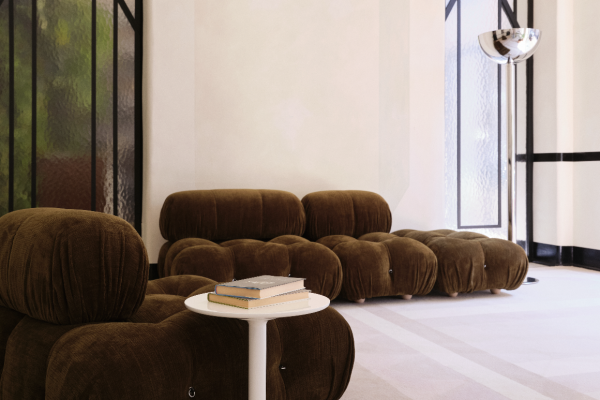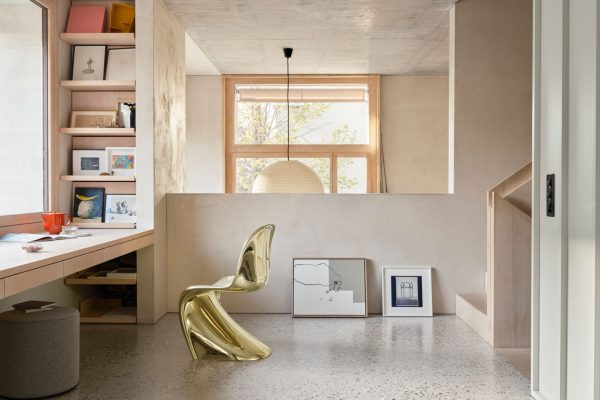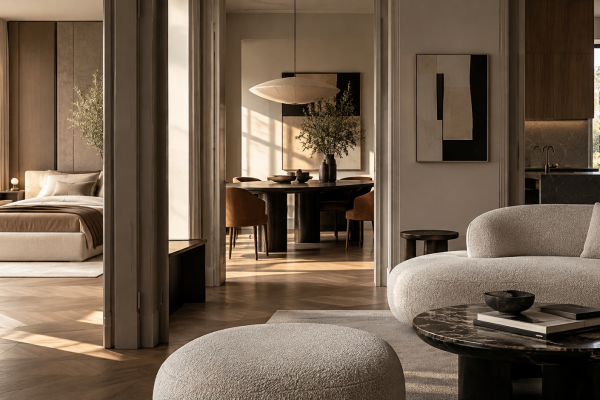
The natural world does not enter interiors as decoration. It enters as a design principle.
Biophilic design is one of the most influential themes in contemporary architecture—an approach that places the deep relationship between human beings and nature at its core. In an era where we spend most of our time indoors, reintroducing natural elements into interiors means enhancing well-being, quality of life, and spatial perception.
This is not simply an aesthetic trend, but a true design methodology that integrates light, organic materials, and vegetation in a structural way.
In this context, consultancy-led realities specializing in materials and surfaces such as SAG’80 support designers and private clients in selecting natural solutions capable of creating an authentic dialogue between architecture and the environment.
1. What Is Biophilic Design
The concept of biophilic design has its roots in the studies of biologist Edward O. Wilson, who in the 1980s introduced the term “biophilia” to describe the innate human inclination toward life and natural elements.
Biophilic design in interiors can be defined as a design approach that integrates nature, light, organic materials, and continuity with the outdoors to improve well-being and quality of living.
Since then, architecture and interior design have explored ways to integrate nature into built environments, with the aim of enhancing psychophysical comfort, productivity, and overall living quality.
Today, biophilic design is considered a comprehensive approach: it is not enough to simply add plants or natural materials—what is required is the creation of an authentic dialogue between architecture and nature. This means working with light, proportions, ventilation, textures, and visual continuity, transforming interiors into more balanced and welcoming ecosystems.
2. Natural Light and Connection with the Outdoors
Natural light is one of the most powerful elements of biophilic design. Large windows, carefully designed openings, and reflective surfaces help amplify brightness and create more dynamic, psychologically comfortable environments.
Contemporary design increasingly tends to dissolve the boundary between interior and exterior, promoting open views, livable terraces, and solutions that extend space toward the landscape.
Light is not only an aesthetic factor—it affects circadian rhythms, mood, and spatial perception.
For this reason, the selection of materials that interact with light is fundamental. Realities such as SAG’80 support designers and clients in choosing natural surfaces capable of enhancing luminosity and visual continuity.
3. Natural Materials in Contemporary Interiors
Wood, stone, natural fibers, and textured surfaces are key elements of biophilic design. Their presence introduces warmth, authenticity, and a sensory richness that artificial materials cannot replicate.
Wood naturally regulates humidity and conveys a sense of comfort; stone brings solidity and material continuity; natural textiles enhance the tactile quality of space.
Material selection is not only about aesthetics, but also about the ability to create healthier and more welcoming environments. Natural surfaces contribute to a more harmonious perception and a deeper living experience.
4. Nature as a Design Element
In biophilic design, vegetation becomes a true architectural component. Vertical gardens, internal courtyards, integrated greenery, and continuity with the external landscape contribute to creating living, dynamic, and healthy environments.
Nature, in this approach, is not decorative—it is a structural element of the project, capable of defining space, atmosphere, and the quality of the living experience.
The presence of greenery improves air quality, reduces stress, and enhances the perception of well-being.
In more advanced projects, nature becomes fully integrated into the structure: bioclimatic greenhouses, internal patios, natural ventilation systems, and solutions that support domestic biodiversity.
5. Common Mistakes in Natural Design
One of the most frequent mistakes is using nature as mere decoration. A few plants are not enough to create true biophilic design.
Other common errors include:
• choosing “fake natural” materials lacking sensory quality
• introducing vegetation without considering light, maintenance, and growth
• creating incoherent contrasts between materials and architecture
• using greenery as a purely scenographic element without real integration
A correct approach requires integration between light, materials, and vegetation, as well as a coherent design vision that considers space as a whole.
This is where consultancy-driven realities such as SAG’80 play a key role, supporting the selection of materials and solutions that ensure coherence, quality, and long-term durability.
Biophilic design is not a passing trend, but an evolution in the way interiors are conceived. Integrating nature, light, and authentic materials means creating more balanced, sustainable environments aligned with contemporary needs.
Designing through a biophilic lens requires a vision that goes beyond aesthetics—one capable of combining architecture, materiality, and well-being into a coherent and enduring system.
FAQ
What is biophilic design in interiors?
It is a design approach that integrates nature, natural light, and organic materials into interior spaces to enhance well-being and quality of living.
Is biophilic design just about adding plants indoors?
No. It is not about decorative elements, but about designing spaces that integrate light, natural materials, and continuity with the external environment.
Which materials are most used in biophilic design?
Wood, stone, natural fibers, and textured surfaces are the main materials, selected for their authenticity and their ability to enhance the sensory perception of space.