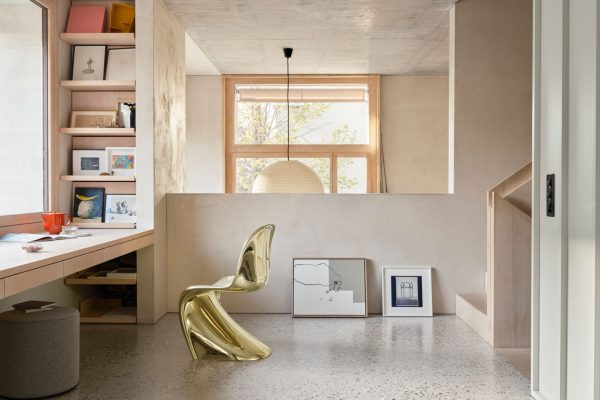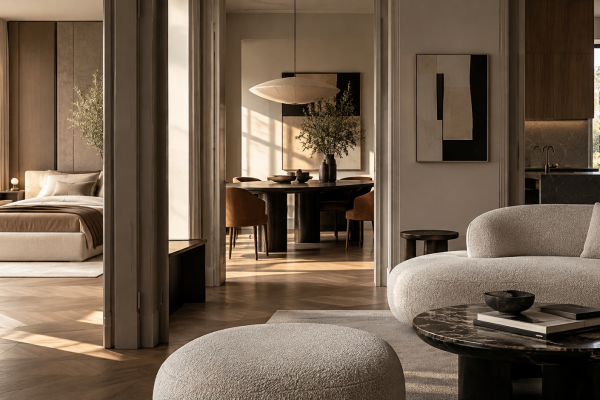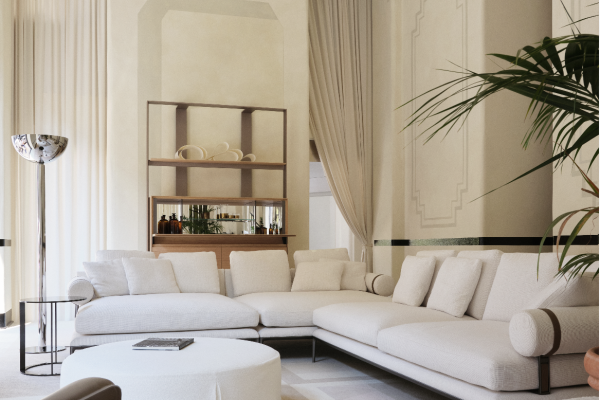
Contemporary interior design is gradually moving away from combining multiple materials in favour of a new concept of continuity. It is within this context that material drenching has emerged as one of the most compelling design trends of recent years, gaining further momentum through the standout installations showcased during Milan Design Week.
Material drenching is a design approach that applies a single dominant material—or a coherent family of related materials—across walls, flooring, furniture and architectural details, creating visual continuity and a more immersive spatial experience.
More than an aesthetic choice, it represents a different way of designing interiors: material becomes the primary language of the space, shaping environments that feel more harmonious, legible and balanced.
Material Drenching: A New Vision of Material Continuity
Material drenching goes beyond the traditional concept of surface finishes, transforming material into a true architectural element.
Walls, floors, bespoke joinery and furnishings interact through a continuous material language that eliminates visual fragmentation and reinforces the perception of space.
The objective is not to create uniform interiors, but to establish a cohesive design identity in which every surface contributes to the same material narrative.
The Materials That Define the Trend
Material drenching can be interpreted through a wide range of materials, each offering its own expressive qualities.
- Natural stone — brings solidity, elegance and a sculptural character. Ideal for contemporary interiors and minimalist architecture.
- Textured wood — introduces warmth, depth and visual comfort, enhancing spaces dedicated to gathering and relaxation.
- Technical textiles — allow continuous surface applications while improving acoustic performance and the sensory experience of the interior.
- Continuous surfaces — microcement, resin finishes and monolithic materials amplify spatial continuity and create a cleaner architectural language.
The choice of a dominant material depends not only on its aesthetic qualities, but also on how it interacts with light, proportions, everyday use and long-term maintenance.
When It Works—and When It Becomes Too Much
Material drenching succeeds when it:
- celebrates materiality without overwhelming the space;
- maintains balance between vertical and horizontal surfaces;
- responds harmoniously to both natural and artificial light;
- respects the proportions of the interior.
It can become excessive when:
- the chosen material dominates the space without creating balance;
- there is insufficient variation between textures and finishes;
- the behaviour of light is not taken into account;
- it is applied as a purely decorative effect rather than as part of a broader design vision.
Material continuity should never become visual monotony. Even within a single material, variations in finish, texture and light reflection help create depth, rhythm and spatial richness.
The Role of Design Consultancy in Material Selection
Selecting a dominant material requires technical expertise, in-depth knowledge of surface finishes and the ability to interpret the client’s lifestyle and project objectives.
For design partners such as SAG’80, choosing the dominant material is a strategic decision that influences spatial perception, durability, lighting performance, maintenance requirements and the overall identity of the project.
Professional design consultancy makes it possible to:
- select authentic materials that are fully aligned with the project;
- evaluate both long-term aesthetic and functional performance;
- integrate lighting, furnishings and architecture into a single cohesive vision;
- avoid unnecessary excess while ensuring elegant, timeless results.
Conclusion
Material drenching represents a new interpretation of material continuity in contemporary interior design.
More than a passing trend, it reflects a broader shift in the way interiors are conceived: material once again becomes the primary language of residential architecture, creating spaces that are more cohesive, more sensory and better equipped to retain their value over time.
When applied with balance and expertise, it creates immersive, legible interiors with a strong and distinctive identity.
SAG’80 embraces this approach through a design philosophy centred on authentic materials, perceptual quality and overall coherence, transforming every interior into an experience that combines aesthetics, functionality and lasting durability.
FAQ
What is material drenching?
Material drenching is an interior design approach that uses a single dominant material—or materials from the same family—to create visual continuity across walls, floors, furnishings and architectural details.
Why has material drenching become a trend in contemporary interior design?
Because it creates more harmonious interiors, reduces visual fragmentation and places materiality at the centre of the design concept.
Which materials are best suited to material drenching?
Natural stone, wood, microcement, resin finishes, continuous surfaces and technical textiles are among the most commonly used materials for achieving material continuity.
When does material drenching work best?
When it is integrated into a comprehensive design strategy that considers lighting, proportions, spatial function and material quality, rather than being applied purely as a decorative effect.