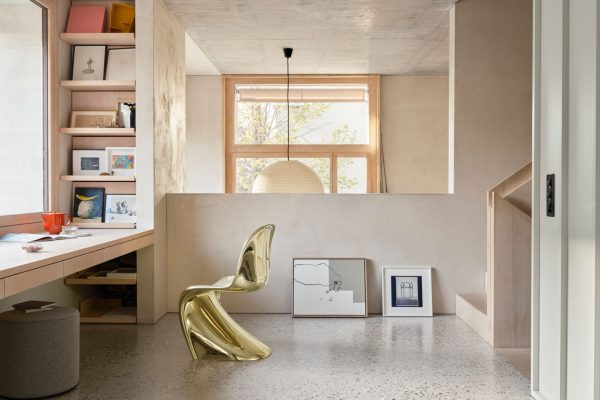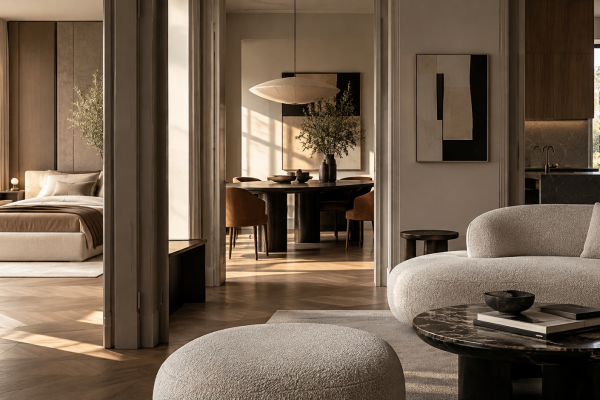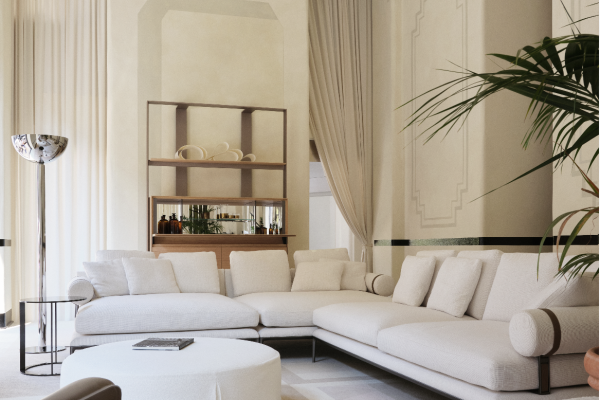
In contemporary interior design, the showroom is not simply an exhibition space, but an integral tool within the design process. It allows materials, surfaces, furnishings and finishes to be observed at full scale, bringing together perception, technical quality and design intent.
Digital tools are essential during the preliminary phase: they make it possible to explore moodboards, collections and references quickly and efficiently. However, in contemporary design, certain decisions cannot be made through a screen alone.
The perception of materials, surfaces and proportions has a physical dimension that digital representation can only convey in part.
Images interpret reality through lighting, photography and the characteristics of the screen itself. Direct experience adds essential information: texture, temperature, depth, reflections and the relationship between an object and the scale of the space.
From this perspective, SAG’80 showrooms become part of the design journey: not simply display spaces, but environments in which materials, furnishings and solutions can be observed, compared and interpreted within a broader design vision.
Touching Materials Changes Perception
Material selection is one of the most delicate stages of the design process. A surface seen online may appear warm, tactile or velvety. In person, different qualities emerge: visual weight, texture, temperature, depth and tactile response.
Touching a piece of wood, observing natural stone at close range or feeling the weave of a fabric provides information that contributes directly to the quality of the design decision.
Materiality is not only about the appearance of a surface, but also about how it is perceived through sight, touch and its relationship with the other elements within the space.
In SAG’80 showrooms, this sensory dimension becomes part of the consultancy process: materials are not simply selected, but assessed in relation to the overall project.
Natural Light and the Appearance of Surfaces
Light is one of the elements that most strongly influences the perception of materials and colours.
A matt surface can gain depth, a lacquered finish can shift in perceived tone, a metal can produce different reflections, and a fabric can absorb or reflect light in unexpected ways.
Observing materials and finishes under different lighting conditions therefore makes it possible to understand their behaviour more accurately and anticipate the relationship they will establish with the environment in which they will be placed.
The appearance of a material is never entirely autonomous: it results from the relationship between surface, light, colour and architecture. For this reason, direct evaluation is particularly important in projects where material and chromatic continuity play a central role.
The Role of the Showroom in Design Consultancy
The contemporary showroom is not simply a container for products. It is a place in which possibilities can be compared and design decisions tested in tangible terms.
Here, clients can observe combinations, understand differences between materials and finishes, evaluate proportions and engage directly with designers and consultants.
The value of the showroom also lies in its ability to reduce the distance between imagination and realisation, transforming product selection into a more informed decision-making process.
For SAG’80, this approach represents an integral part of its role as a design partner: connecting expertise, materials, brands and design culture to create solutions that are coherent with both the space and the needs of those who will inhabit it.
Why Design Begins with Experience
A project does not begin solely with a catalogue, a rendering or a moodboard.
It also begins with direct contact with materials, with the perception of proportions and with the opportunity to test the relationships between surfaces, furnishings and light.
Visiting a showroom therefore adds an experiential dimension to the design process: seeing, touching, comparing and understanding before making a choice.
In this sense, the showroom becomes a place where the project can be tested: a space in which intuitions and hypotheses can be evaluated before becoming decisions intended to last over time.
Conclusion
The showroom is one of the places where design moves from idea to reality.
Materials, light, proportions and surfaces cease to be abstract representations and become tangible experiences. This transition helps guide decisions, compare alternatives and better understand the quality of what will ultimately become part of the space.
For SAG’80, this experience is part of the design method: guiding the client through a process in which seeing means understanding, touching means evaluating, and comparing means choosing with greater awareness.
Because in interior design, quality cannot simply be represented. It must be experienced.
The showroom therefore becomes not the final stage of a choice, but one of the places where the design process truly begins.
FAQ
Why visit an interior design showroom?
Visiting a showroom makes it possible to assess materials, surfaces, colours, proportions and furnishings directly, comparing their aesthetic, tactile and functional qualities before incorporating them into a project.
Why is it important to choose materials in person?
Because texture, depth, temperature, colour and response to light can only be partially perceived through photographs, renderings and digital screens.
What role does the showroom play in interior design?
The showroom can become an integral tool within the design process, allowing clients and designers to compare solutions, test combinations and make more informed decisions regarding materials, furnishings and finishes.