The Evolution of Domestic Design
For decades, the home was organized according to a hierarchical model: closed rooms, separate functions, predefined circulation paths. Today, this structure feels limiting. The design of multifunctional spaces emerges from the need to create environments capable of evolving over time, without sacrificing architectural quality.
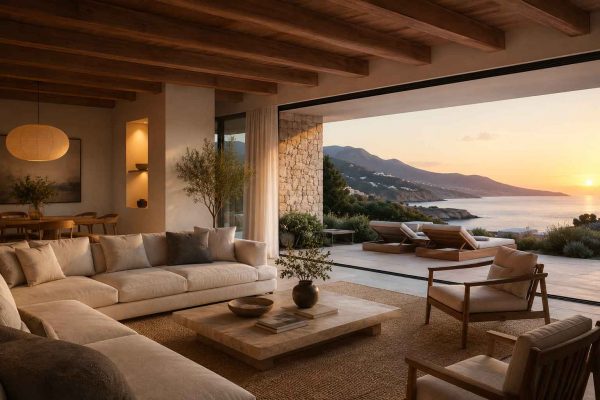
Fluid space in contemporary interiors can be defined as a dynamic system in which functions coexist through visual, material, and volumetric continuity, without rigid barriers yet guided by clear design hierarchies.
Fluid space is not an indistinct open plan, but a dynamic system in which functions interact through visual, material, and volumetric continuity. It represents a new way of conceiving domestic living—closer to contemporary rhythms and needs.
2. Multifunctionality Without Aesthetic Compromise
Function and Formal Coherence
The true challenge of multifunctional interior design lies in maintaining balance between practical requirements and aesthetic coherence. A space may accommodate multiple functions—working, relaxing, entertaining—yet it must do so without appearing chaotic or improvised.
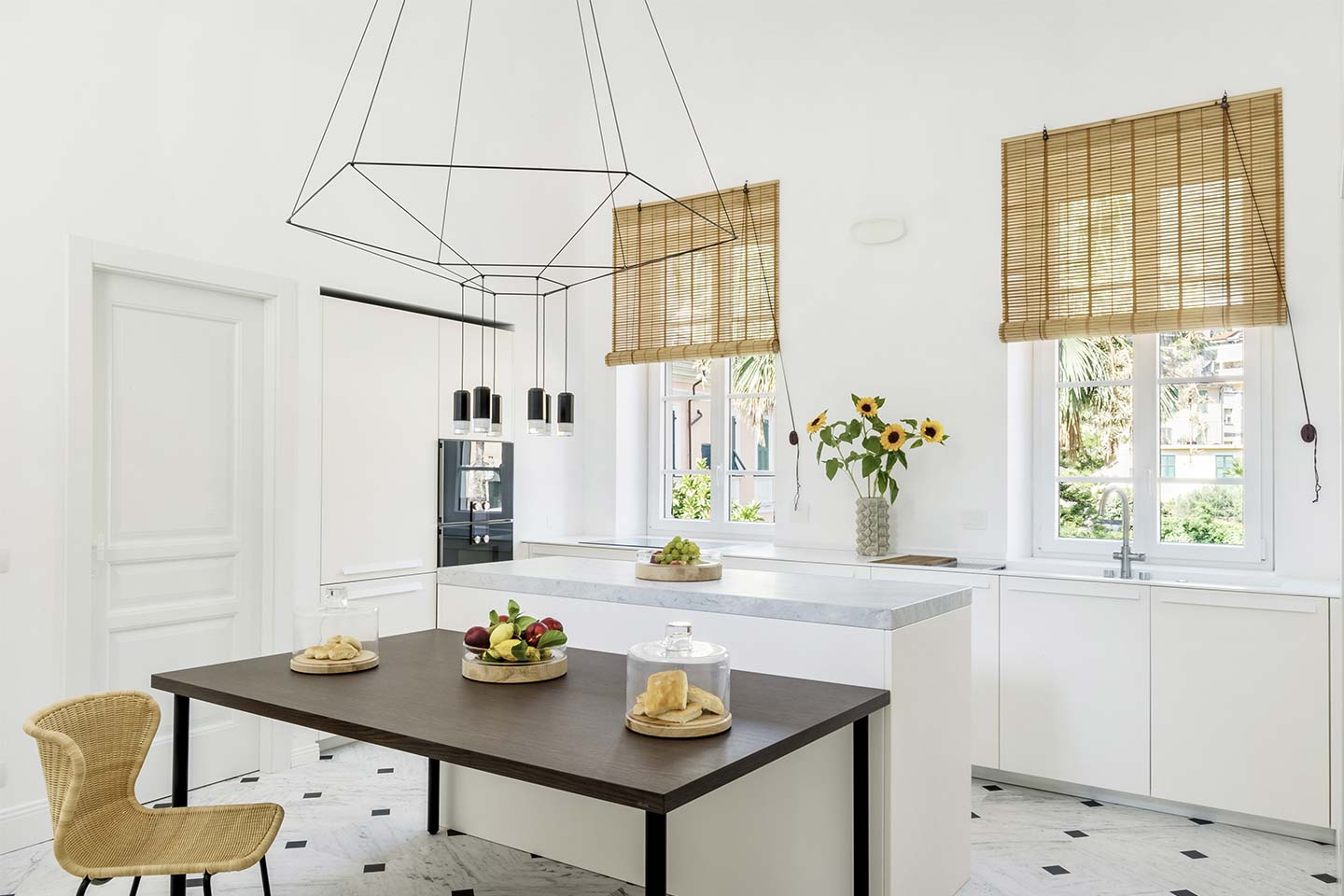
Continuous materials, calibrated color palettes, and integrated solutions make it possible to achieve a flexible layout that remains elegant and legible. Multifunctionality thus becomes a design value, not a compromise.
In a context where home and work increasingly coexist within the same environment, the ability to integrate diverse functions without generating visual disorder has become a marker of design quality.
3. Invisible Hierarchies and Spatial Transitions
Defining Spaces Without Dividing Them
In a fluid space, separation does not occur through walls, but through invisible hierarchies: changes in level, variations in lighting, strategically positioned furniture, architectural elements that suggest functions without imposing them.
Spatial transitions become fundamental tools for defining distinct areas while maintaining continuity and lightness. It is a sophisticated way of organizing space that requires design sensitivity and attention to detail.
4. Integrated Furnishings and Interior Architecture
When the Project Becomes a Unified System
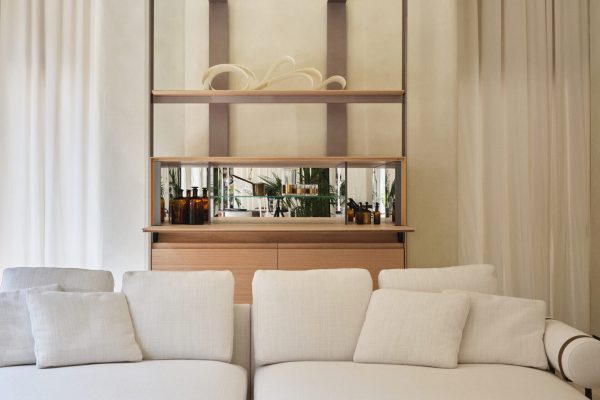
A flexible home requires furnishings that are not merely objects, but parts of a system. Equipped wall paneling, storage walls, sliding elements, volumes that conceal functions—the evolved open plan emerges from the integration of architecture and interior design.
In this context, consultancy-oriented firms such as SAG’80 play a key role, selecting solutions and brands capable of dialoguing with the space and enhancing its versatility, while maintaining coherence and aesthetic quality.
5. Mistakes to Avoid in Multifunctional Spaces
Why Flexibility Is Not Improvisation
Flexibility does not mean the absence of design. Among the most common mistakes:
• removing too many partitions without introducing new hierarchies
• selecting furniture that is out of proportion
• neglecting acoustics in open environments
• failing to properly integrate storage systems
• creating inefficient circulation paths
A poorly designed fluid space risks becoming a chaotic open plan, where different functions overlap without clear direction.
Effective design requires vision, expertise, and a deep knowledge of materials and integrated solutions. It is this rigorous approach that enables the creation of fluid, elegant, and truly functional environments over time.
Fluid spaces are not a passing trend, but a structural response to new lifestyles. They require design control, material coherence, and the ability to anticipate the evolution of living needs.
Understanding spatial fluidity means going beyond layout and working on the overall orchestration of the environment. It is at this stage that design experience and specialized consultancy become decisive in transforming flexibility into real value.
FAQ
What is a fluid space in contemporary interiors?
It is a design system in which functions coexist without rigid divisions, through invisible hierarchies, material continuity, and integrated solutions.
Does fluid space mean open plan?
No. A fluid space is not an indistinct environment, but a project with transitions and hierarchies that organize functions without traditional walls.
How can chaos be avoided in multifunctional spaces?
Through clear design direction, integration of bespoke furnishings, acoustic control, and well-defined circulation paths.