In the world of design, few questions are as fascinating as the ability of an icon to evolve over time.
Some objects move across eras, cultural shifts and technological transformations while remaining instantly recognisable. Others, however, risk losing part of their identity when they are altered.
The question, therefore, is not only why certain icons continue to feel contemporary, but how far a design can change before becoming something fundamentally different from the original.
Reinterpreting a historic design means intervening in some of its elements — colour, material, finish or production technology — while preserving the characteristics that define its design identity.
This is where the delicate balance between preservation and innovation is established.
What Makes a Design Icon Recognisable
An icon is not simply a successful object. It is a design that, over time, has developed an immediately recognisable identity.
Often, a silhouette, a proportion, a structure or a distinctive detail is enough to make it identifiable even outside the context in which it was originally conceived.
Recognisability, however, does not depend on a single element. It emerges from the relationship between form, function, construction and design language.
To understand whether a reinterpretation respects a historic design, it is therefore necessary first to identify which elements are essential to its identity and which, by contrast, can evolve without compromising it.
Form and Design Identity
Form is often a fundamental component of the identity of a historic design, but it is not necessarily the only one.
In some objects, the silhouette is decisive; in others, it is the relationship between structure and material, the construction system or even the way the object is used.
The real question therefore becomes how to distinguish between what is structural to the design concept and what belongs to its expression within a particular historical moment.
This distinction helps explain why some variations appear natural, while others seem to alter the character of the object much more profoundly.
Which Elements Can Change Over Time
Colours, finishes, materials and production processes are among the aspects that most frequently evolve throughout the life of a design.
New technologies can improve performance or manufacturing processes; new finishes can alter the relationship with light; new colour palettes can place an object within different aesthetic sensibilities.
Change becomes meaningful when it does not simply attempt to make an object “more contemporary”, but instead opens up a new way of reading it while keeping the original design recognisable.
Not every variation, however, is a reinterpretation. Changing a colour may simply extend the range; intervening in the surface, material or production process can instead alter the perception of the object more profoundly.
When Reinterpretation Enriches the Design
The most successful reinterpretations do not attempt to correct the original design.
They look at it from a different perspective.
A new finish, a different treatment or an updated technology can reveal qualities that were less apparent in the original version.
A reinterpretation works when the change creates a new experience of the object without making the idea behind it unrecognisable.
Its relationship with light, space, touch or context may change, while the elements that define its identity remain stable.
When Change Risks Altering Its Identity
There is, however, a threshold beyond which intervention can compromise the very nature of the design.
If form, proportions, structure, material and mode of use are all changed at the same time, reinterpretation risks becoming an entirely new design that uses the original merely as a reference.
Innovation therefore does not mean transforming everything.
In design, preserving the identity of a project means recognising which characteristics are essential to its recognisability and which can instead evolve.
It is precisely this ability to distinguish between permanence and transformation that makes a reinterpretation credible.
Panton Chair: A Form That Spans Different Eras
The Panton Chair provides a particularly effective example through which to explore this balance.
Its continuous and instantly recognisable silhouette is one of the defining elements of its identity.
Over time, colours, production processes and finishes have allowed the object to be interpreted in different ways without compromising its recognisability.
Precisely because the form is so strongly identifiable, the surface becomes one of the areas in which a new interpretation can be explored.
Classic Gold: When the Surface Changes Perception
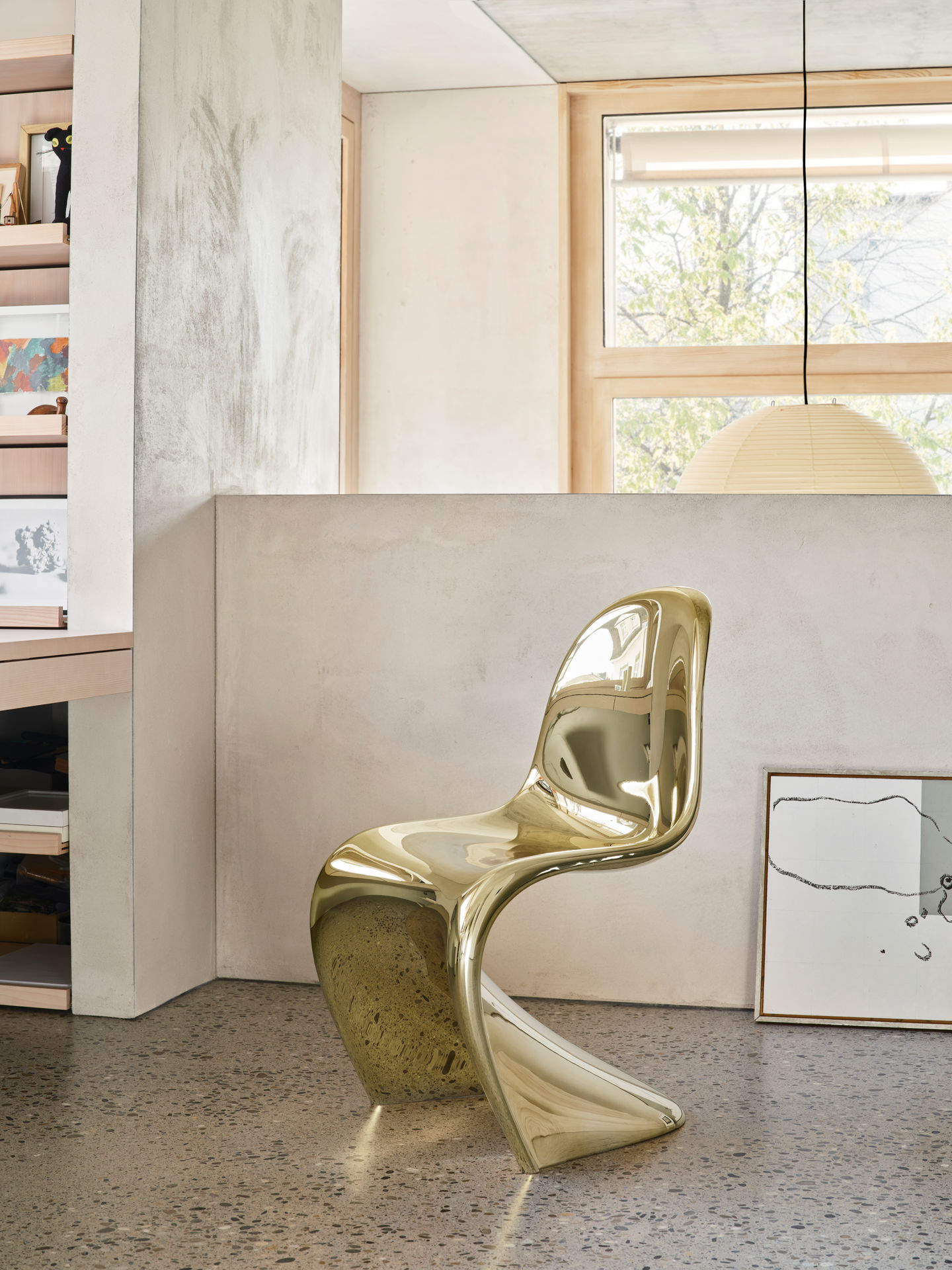
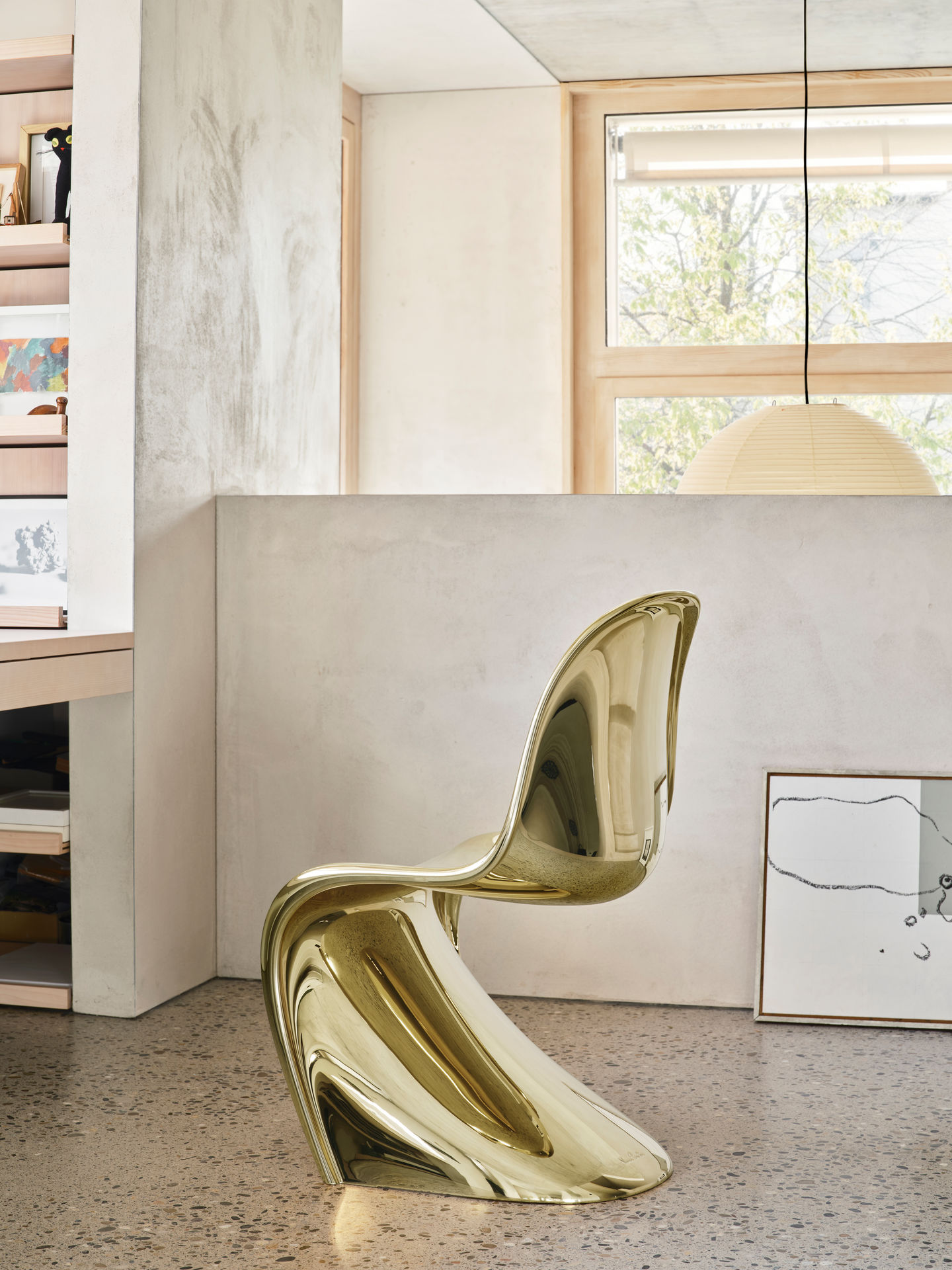
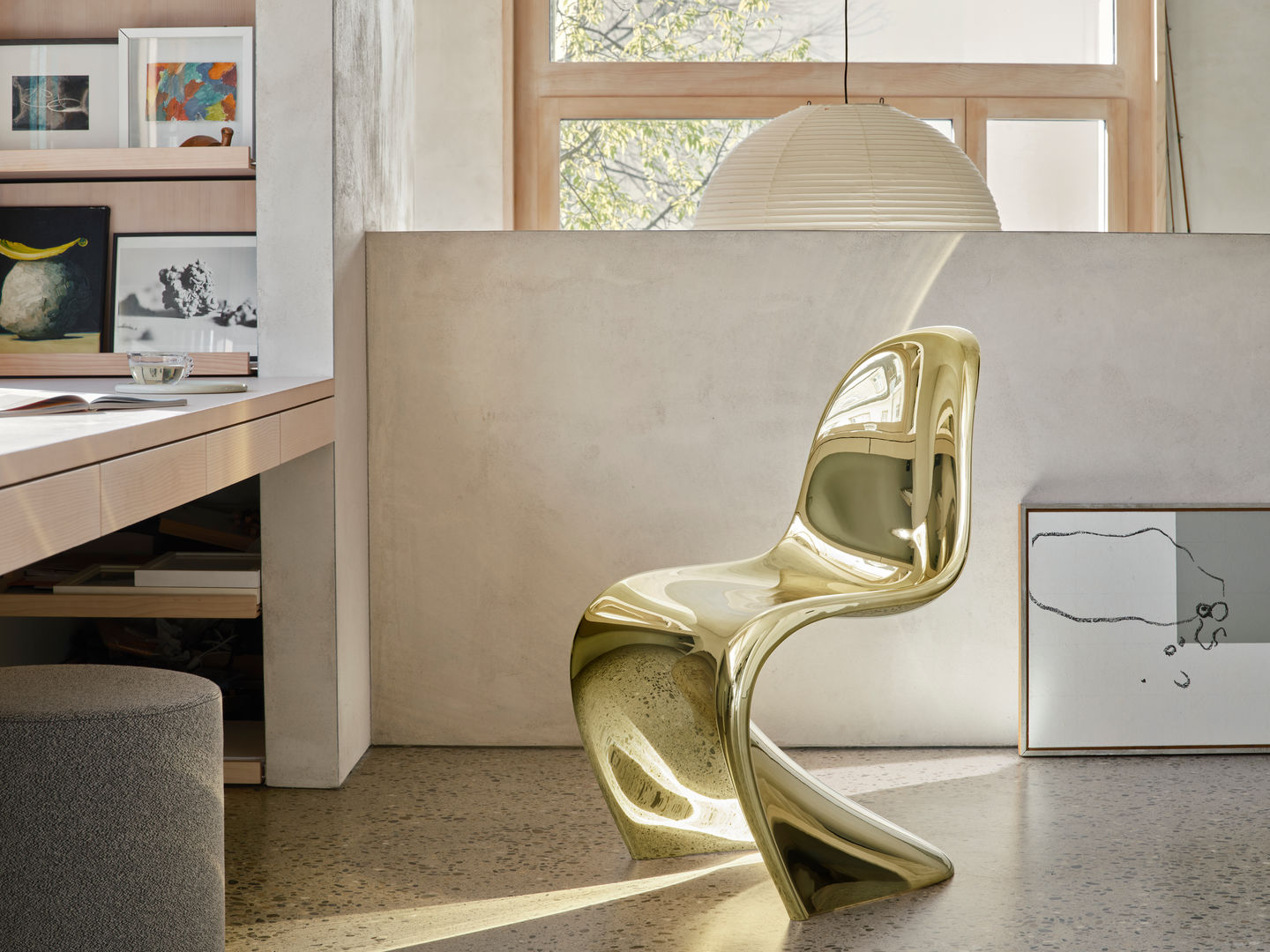
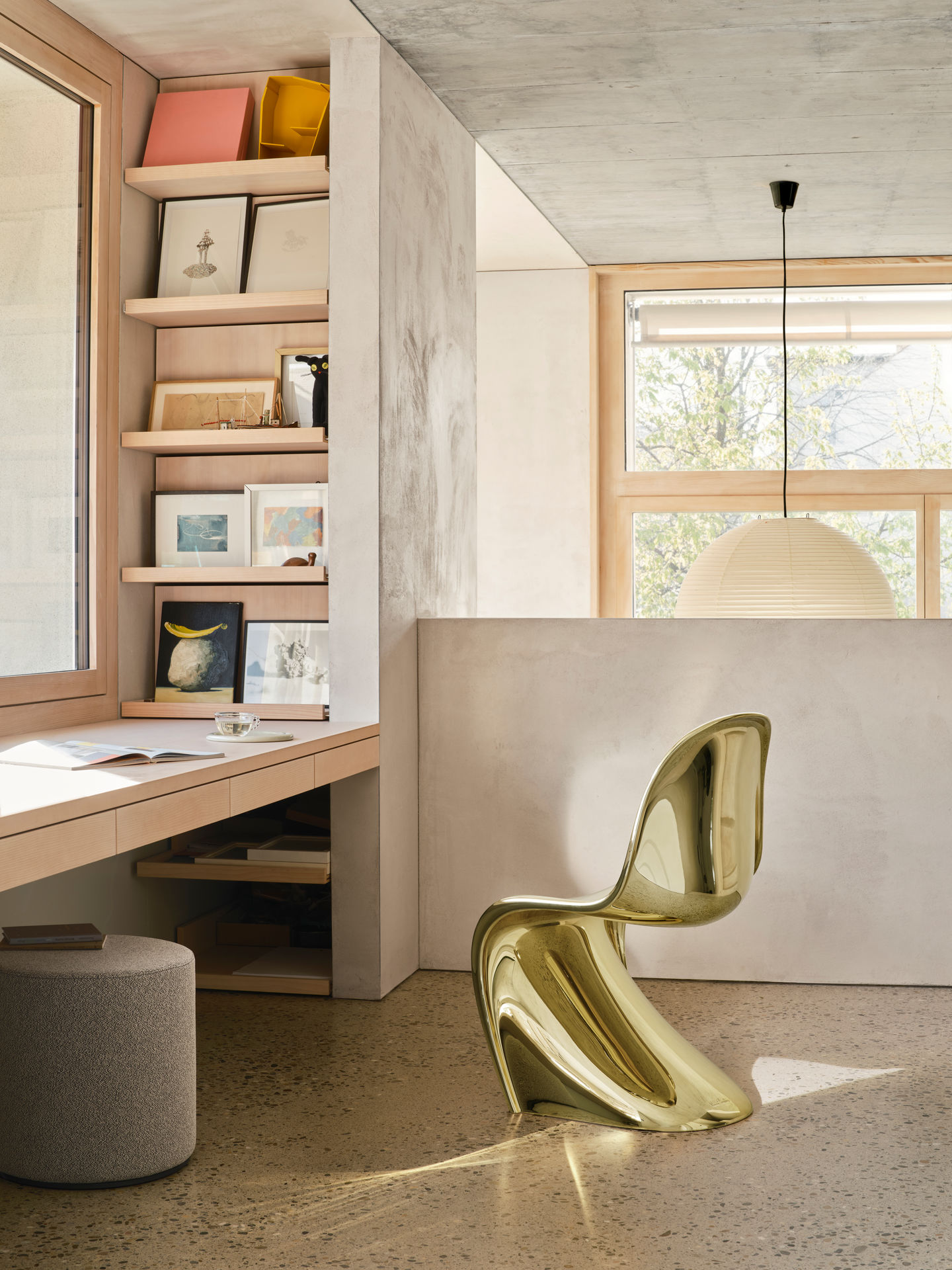
The Panton Chair Classic Gold offers a particularly interesting example because the intervention does not alter the object’s silhouette, but rather the way in which it is perceived.
The gold surface changes its relationship with light, creates different reflections and accentuates the sculptural character of the continuous form.
The variation therefore acts primarily on the perceptual dimension: the formal identity remains recognisable, while the object’s presence within the space changes.
It is precisely this contrast that makes the case so interesting: the form remains, while perception changes.
The Classic Gold does not replace the identity of the Panton Chair, but instead highlights different qualities through its surface.
Why Experiencing a Reinterpretation in Person Changes the Way We Read an Object
Certain qualities of an object cannot be fully understood through a photograph.
Texture, reflections, depth, proportions and the relationship with light can only be fully perceived through direct experience.
Seeing a design in person also makes it possible to compare the image we already know with its actual physical presence within a space.
In the case of a reinterpretation centred on surface treatment, this experience becomes even more relevant: light changes throughout the day, reflections respond to the surrounding environment and the perception of the object shifts according to the viewer’s position.
It is also through this opportunity to observe and compare designs directly that places such as SAG’80 can contribute to design culture: not simply by displaying objects, but by providing a context in which their materials, proportions and evolution can be understood.
Conclusion
Reinterpreting an icon does not necessarily mean making it more contemporary.
Rather, it means understanding which parts of a design can evolve without compromising its identity.
Form, proportions, structure, materials and surfaces do not always carry the same weight: every design has its own balance and requires a specific reading.
The Panton Chair Classic Gold demonstrates how a variation focused on the surface can significantly alter the perception of an object while leaving its identity clearly recognisable.
Perhaps this is one of the most compelling qualities of true design icons: they are not simply preserved, but continue to offer space for interpretation.
Because a design capable of standing the test of time does not necessarily have to remain unchanged. It needs to know what can evolve and what, instead, must remain.
FAQ
What does it mean to reinterpret a design icon?
Reinterpreting a design icon means modifying certain elements of the project, such as colour, material, finish or production technology, while preserving the fundamental characteristics that define its identity.
Which elements of a historic design can change over time?
Colours, surfaces, materials and production processes can often evolve. Whether they can be modified, however, depends on the role they play within the overall identity of the design.
When does a reinterpretation risk altering a design icon?
When essential elements such as form, proportions, structure or function are changed to the point that the design becomes difficult to recognise in relation to the original.
Why is the Panton Chair Classic Gold an interesting reinterpretation?
Because it retains the recognisable form of the Panton Chair while the gold finish changes its relationship with light and the perception of its surface, creating a new reading of the object.
Why is it useful to see a reinterpreted design icon in person?
Because qualities such as texture, reflections, proportions, depth and the relationship with light are difficult to understand fully through digital images alone.